Most Landing Pages Are Burning Money — Here's Why
The average landing page converts at 2.35%. The top 25% convert at 5.31% or higher. That gap isn't explained by budget, design talent, or brand recognition. It's explained by optimization — specifically, how quickly and intelligently teams identify what's working and what's killing conversions.
AI landing page optimization is the fastest way to close that gap. Where traditional A/B testing takes weeks to reach statistical significance, AI-powered tools can analyze heuristics, predict user behavior, and surface winning variants in a fraction of the time. For marketers who are serious about conversion rate optimization, ignoring AI in this area is leaving measurable revenue on the table.
This guide covers the full playbook: what AI actually does on landing pages, which tools work best, and how to build a systematic optimization process that compounds over time.
What AI Actually Does to Improve Landing Pages
There's a lot of vague hand-waving about "AI optimization" in marketing circles. Let's be specific about what these systems actually do:
Heatmap and scroll analysis at scale: Traditional heatmap tools show you where people click and scroll. AI layers on top of that by identifying patterns across thousands of sessions simultaneously — flagging which elements are creating friction versus driving engagement.
Predictive copy scoring: Tools like Copy.ai, Jasper, and specialized landing page platforms can score headline variants before you run traffic to them, based on emotional resonance, clarity, and intent-match signals from millions of data points.
Dynamic content personalization: AI enables real-time content swapping based on visitor source, device, location, or behavior — so a visitor arriving from a Facebook ad sees different headline copy than one arriving from organic search. This alone can lift conversions by 20-40%.
Multivariate testing acceleration: Instead of testing one variable at a time, AI-powered landing page AI tools run multivariate experiments and use machine learning to identify winning combinations exponentially faster than human-managed splits.
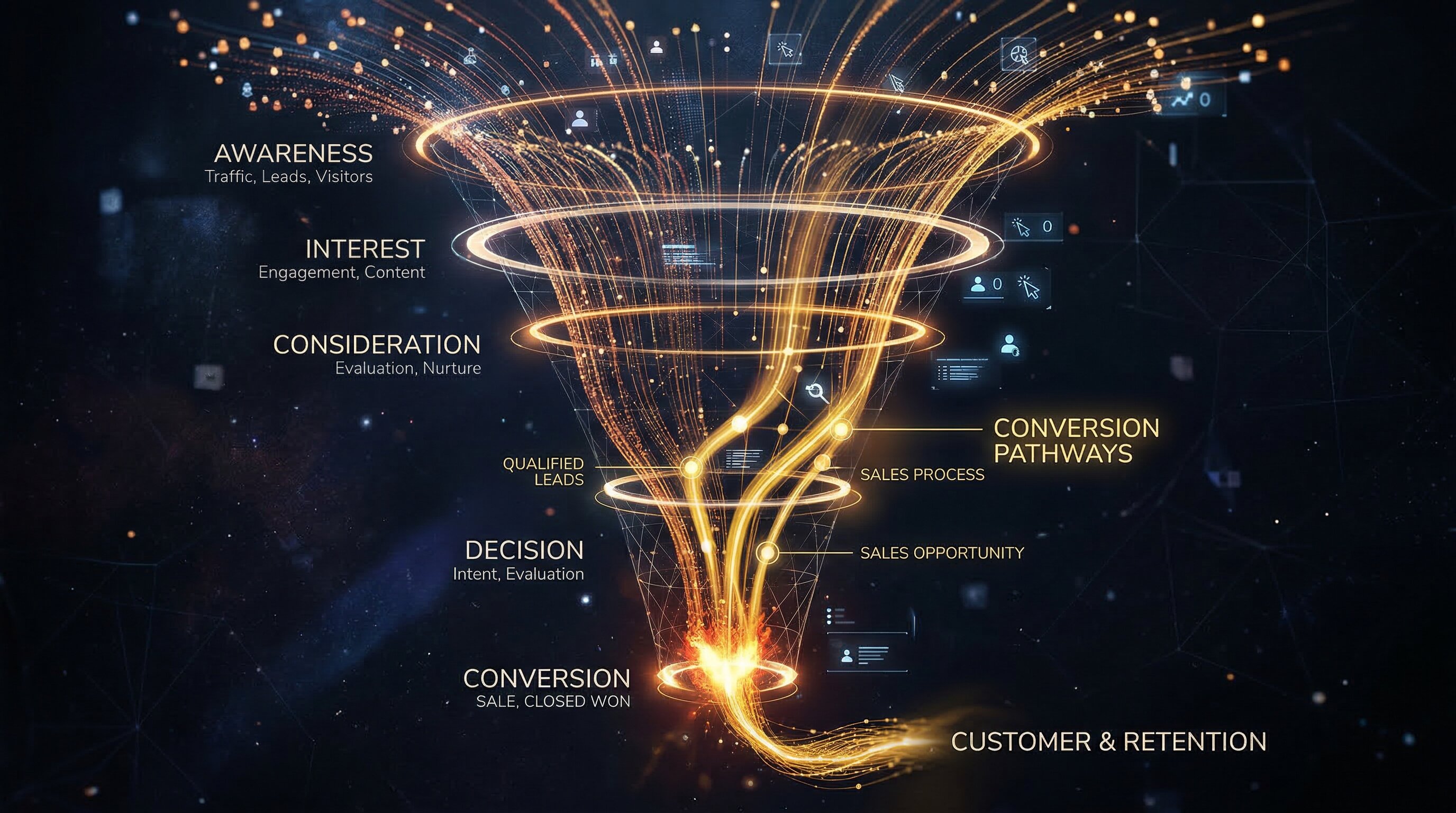
For a deeper look at how these tools fit into your full funnel, see our AI funnel builder guide.
The 6-Step AI Landing Page Optimization Framework
Optimization without a system is just guessing. Here's a repeatable framework built around AI landing page optimization principles:
- Audit your current page with AI tools. Run your existing page through tools like Unbounce's AI optimization layer or Instapage's analytics suite. Get a baseline CTA click rate, time on page, and scroll depth.
- Identify the highest-impact element to test first. AI heatmap analysis will typically point to one of three culprits: the headline, the hero image, or the primary CTA button. Start there.
- Generate variants with AI copy tools. Use ChatGPT, Claude, or a dedicated ad/landing page copy tool to produce 5-10 headline variants. Score them for clarity, urgency, and benefit-focus.
- Set up AI-assisted A/B testing. Platforms like VWO, Optimizely, or Unbounce now have AI-powered traffic allocation that routes more visitors to winning variants automatically, shortening test duration.
- Personalize by traffic source. Once you have a winning baseline, create source-specific variants. Paid traffic versus organic versus email referrals have different intent levels — speak to each one directly.
- Analyze with AI reporting, then iterate. Use your analytics platform's AI summary features to extract actionable insights from your test results. Don't just declare a winner — understand why it won. Check our AI marketing resources for recommended analytics tools.
Real-World Results: What Smart AI Optimization Looks Like
Let's make this concrete. A SaaS company using dynamic headline personalization based on traffic source saw their trial sign-up rate jump from 3.1% to 6.8% in 60 days — more than doubling conversions without changing the offer or the price. The only change was showing intent-matched messaging to each visitor segment.
An e-commerce brand running AI-powered multivariate tests on their product landing pages discovered that a combination of a specific testimonial format, a reduced form field count, and a revised CTA from "Buy Now" to "Get Yours Today" lifted revenue per visitor by 34% in a single quarter.
These aren't outliers. Conversion rate optimization AI produces compounding returns because every winning test informs the next one. Over 6-12 months of consistent AI-assisted optimization, the gap between a mediocre landing page and a high-performer becomes enormous.
Top AI Landing Page Tools Worth Using in 2026
You don't need all of these — you need the right ones for your stack. Here's a practical breakdown:
- Unbounce Smart Traffic: AI-powered traffic routing that learns from visitor data and sends each visitor to the variant most likely to convert. Best for teams running multiple landing page variants.
- Instapage: Enterprise-grade personalization and collaboration. Strong AI A/B testing built in. Great for agencies managing multiple clients.
- Hotjar AI Summaries: Takes all your heatmap and session recording data and generates written insights automatically. Saves hours of manual analysis.
- Copy.ai + landing page prompts: Rapid copy generation for headlines, subheads, benefit bullets, and CTA variants. Use our curated AI marketing prompt library for ready-to-use landing page prompts.
- Mutiny: Specifically built for B2B personalization. AI identifies your visitor's company and serves relevant messaging automatically.
Common Mistakes That Kill AI Optimization Efforts
Even with the best tools, teams sabotage their own results. Watch out for:
Testing too many things at once: AI can handle multivariate testing, but you still need clean data to interpret. If you're redesigning the page and rewriting copy and changing the offer simultaneously, you can't identify what drove the result.
Ending tests too early: Even with AI traffic allocation, statistical significance takes time. Pulling a winner after three days with 200 visitors will mislead you more often than not.
Ignoring mobile: Over 60% of landing page traffic is now mobile. Run separate optimizations for mobile and desktop — user behavior differs significantly.
Optimizing the landing page in isolation: The best AI landing page optimization happens in context. The ad creative, the email subject line, and the landing page headline need to match intent. A disconnected message journey tanks conversions regardless of how good the page is.
Get the complete set of AI landing page prompt templates, testing frameworks, and conversion checklists — all in one place.
Get Free AI Toolkit